Why Great Coaches Still Struggle to Get Coaching Clients
The Best Coaching I Ever Did Was Invisible
I remember coming out of sessions that had gone really well. The client was moved, something had shifted, and there was more clarity in the room than there had been at the beginning. Those were the days I drove home quietly convinced that I was doing exactly what I was supposed to be doing.
And then, a few hours later, I would sit back at my laptop, look at my calendar and wonder where the next client would come from.
That contrast stayed with me for a long time. Inside the coaching conversation, the work felt alive. Outside of it, the business often felt fragile. I found that surprisingly difficult to reconcile because, in my mind, those two things should have been much more closely connected than they actually were.
The gap I couldn’t explain
For years, I believed that if I kept doing genuinely good work, people would eventually notice. Not overnight, but over time. Clients would tell their friends, word would spread, and little by little the business would grow on the strength of the coaching itself.
Sometimes it did.
But not nearly enough.
The uncomfortable truth was that I could spend two hours helping someone untangle a problem they had been carrying for years, watch them leave lighter than they had arrived, and still have absolutely no idea whether I would have enough work next month.
It took me much longer than I care to admit to understand why.
The work nobody sees
Coaching happens in private. Almost nobody sees it.
The moments I was proudest of were invisible to everyone except the client sitting across from me. The conversations that changed lives, the breakthroughs, the difficult decisions, the tears, the relief, the moments when something finally clicked—those were exactly the moments nobody else would ever witness.
Looking back, I realized I had been expecting invisible work to somehow create visible demand.
It sounds obvious now, but at the time I genuinely believed that the quality of the work would eventually carry the business with it.
What I had not understood was that people cannot choose work they never see.
Learning to make good work visible
That does not mean becoming louder or pretending to be someone you are not. It does not mean turning coaching into marketing theatre or posting inspirational quotes every day. But it does mean learning to talk about your work in a way that allows the right people to recognize themselves before they ever become clients.
Not by explaining every method you know.
Not by proving how qualified you are.
But by helping someone understand what kind of problems you work with, what changes when you work together, and why they might want to start that conversation in the first place.
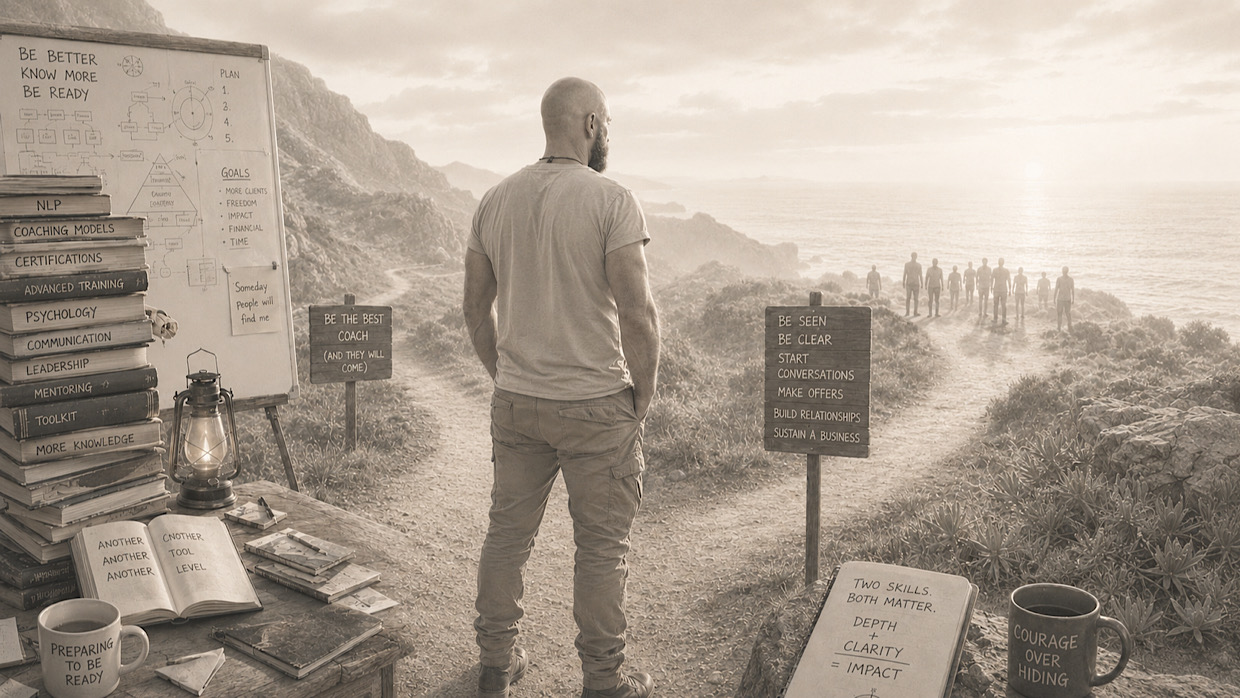
The bridge I had been missing
For me, that was a surprisingly different skill from coaching itself.
Inside a coaching conversation I felt completely at home. Sitting down with one person, listening carefully, asking good questions and helping them see something they could not see before—that part always felt natural.
Talking about my work before there was a coaching conversation felt much harder.
And yet, that was exactly the bridge I had been missing.
Because coaching changes lives one conversation at a time.
But before any of those conversations can happen, someone has to know that you exist.
P.S. It took me years to understand that great coaching doesn’t automatically build a coaching business. If you’d rather not spend those years on your own, I’d love to help. That’s exactly why I created the Coaches Mastermind. You can have a look here and see whether it feels like the right next step.